
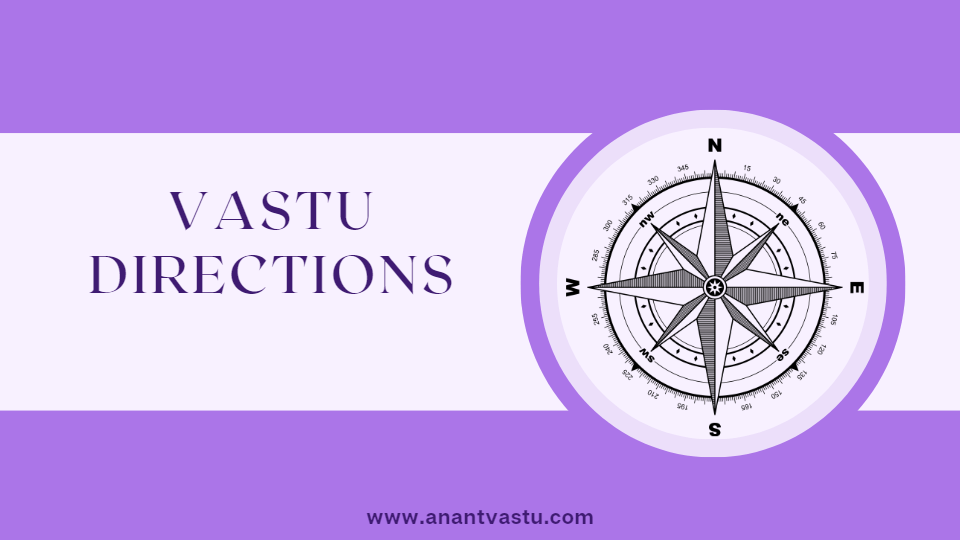
Vastu directions are the core framework through which Vastu Shastra is applied to real spaces. They define how land, buildings, and rooms align with natural forces such as sunlight, magnetic flow, and elemental balance.
Rather than focusing only on design or construction, Vastu directions determine where specific activities—such as sleeping, cooking, praying, working, storing valuables, and the main door placement—should ideally take place so that a space supports stability, growth, and well-being.
The 16-Directional Vastu System: A Technical Guide
Vastu directions are analysed through a structured and degree-accurate 16-direction Vastu system in which every space is divided into 16 precise zones panning 22.5-degree per zone. This degree-accurate system is used in classical Vastu Shastra and advanced Astro-Vastu analysis to assess how different areas of a property influence stability, health, relationships, decision-making, finances, and overall energy flow.
Unlike simplified 8-direction interpretations, the 16-direction model identifies subtle directional variations such as ESE vs East or WNW vs West, which are often missed in generic Vastu analysis. This framework also forms the directional foundation for the 32-Pada Entrance System, 45 Vastu Devta Mandala, and modern Astro-Vastu mapping.
Core Framework
16-Direction Vastu System
Angular Precision
22.5° per Directional Zone
Related Systems
32-Pada Entrnace & 45 Devta Framework
Primary Purpose
Energy Alignment & Directional Diagnosis
This technical guide focuses exclusively on Vastu directions and their attributes. It does not cover remedial measures, colour therapy or astrological modifications.
To understand this system accurately, it is essential to examine how Vastu defines directions in a structured and precise way.
Table of Contents
- What Are the 16 Vastu Directions?
- Why the 16 Vastu Directions Matter
- 8 Vastu Directions vs 16 Vastu Directions
- How to Take Accurate 16 Vastu Direction Measurements
- How the 16 Vastu Directions Are Applied
- North East Direction (Ishanya Kon)
- East of North East (ENE Direction)
- East Direction (Poorva Disha)
- East of South East (ESE Direction)
- South East Direction (Agneya Kon)
- South of South East (SSE Direction)
- South Direction (Dakshin Disha)
- South of South West (SSW Direction)
- South West Direction (Nairutya Kon)
- West of South West (WSW Direction)
- West Direction (Paschim Disha)
- West of North West (WNW Direction)
- North West Direction (Vayavya / Vayu Kon)
- North of North West (NNW Direction)
- North Direction (Uttar Disha)
- North of North East (NNE Direction)
- Vastu Directions for House: A Recap
- Frequently Asked Questions About Vastu Directions
What Are the 16 Vastu Directions?
In Vastu Shastra, every built space is divided into 16 precise directional zones. Unlike the commonly used 8-direction model (North, South, East, West, and their corners), the classical Vastu system recognises 16 distinct directions to enable accurate energy analysis and space planning.
These 16 directions originate from the Vastu Purusha Mandala — the foundational diagram that maps cosmic energies onto physical space. Each direction carries a specific energetic role and influences areas such as health, wealth, stability, clarity, and relationships.
The 16 Vastu directions are classified as follows:
4 Cardinal Directions (Dishas)
- North (Uttar Disha)
- South (Dakshin Disha)
- East (Poorva Disha)
- West (Paschim Disha)
4 Corner Directions (Kons)
- Northeast (Ishanya Kon)
- Southeast (Agneya Kon)
- Southwest (Nairutya Kon)
- Northwest (Vayavya Kon)
8 Sub-Directions
- North of Northeast (NNE)
- East of Northeast (ENE)
- East of Southeast (ESE)
- South of Southeast (SSE)
- South of Southwest (SSW)
- West of Southwest (WSW)
- West of Northwest (WNW)
- North of Northwest (NNW)
Each of these 16 zones occupies exactly 22.5 degrees of the 360-degree compass, forming a precise directional grid used to analyse homes as per Vastu, commercial, and industrial spaces.
Why the 16 Vastu Directions Matter
While many Vastu consultants work with the 8-direction system, the 16- direction framework offers:
- Greater Precision: Identifies subtle energy variations within broader directional zones.
- Specific Diagnosis: Helps pinpoint directional imbalances that the 8-direction model often misses.
- Traditional Authenticity: Aligns with classical Vastu texts such as Vishwakarma Prakash and Brihat Samhita.
- Comprehensive Analysis: Ensures that every part of a space is evaluated, not just the major corners.
Whether you are designing a new home, evaluating an existing property, or planning corrective measures, understanding all 16 Vastu directions provides a complete and structured foundation for effective Vastu implementation
Explore Vastu by Direction & House Facing
Not sure where your house fits? Use these practical guides to understand direction-wise Vastu quickly.
8 Vastu Directions vs 16 Vastu Directions
| Aspect | 8-Direction Vastu System | 16-Direction Vastu System |
|---|---|---|
| Number of zones | 8 primary directions | 16 precise directional zones |
| Level of precision | Broad and general | High precision with intermediate zones |
| Directional coverage | Only cardinal and corner directions | Cardinal, corner, and sub-directions |
| Angle per direction | 45° per direction | 22.5° per direction |
| Accuracy in diagnosis | Suitable for basic Vastu assessment | Suitable for detailed and advanced Vastu analysis |
| Identification of subtle defects | Limited | High – captures micro-level imbalances |
| Use in modern properties | Works for simple layouts | Better suited for apartments and flats as per Vastu and complex layouts |
| Alignment with classical texts | Simplified interpretation | Closer to classical Vastu Purusha Mandala principles |
| Typical users | Beginners and basic planning | Professional consultants and detailed audits |
How to Take Accurate 16 Vastu Direction Measurements
Step 1: Preparation Before Taking Compass Readings
- Remove all metal objects from your person (watch, keys, belts with large buckles, phone).
- Move at least 2–3 meters away from metal structures such as refrigerators, electrical panels, cars, or metal furniture.
- Turn off or move away from electronic devices including Wi-Fi routers, televisions, computers, and speakers.
- Be mindful of hidden metal sources such as steel beams or reinforcement bars (rebar) inside concrete structures.
- Choose a calm day whenever possible, as strong winds can affect compass stability.
Step 2: Taking the Compass Reading
- Stand at the identified centre point (Brahmasthan) of the property.
- Hold the compass level and completely still.
- For a handheld compass: hold it at waist height, parallel to the ground.
- For a smartphone compass: place the phone flat on a level surface at the centre point.
- Wait for the needle to settle fully (usually 3–5 seconds).
- Rotate your body (not the compass) until you are facing the main entrance.
- Read the bearing where the North needle points.
- Record the exact degree value (for example, 347° instead of simply “North”).
Step 3: Verification Process
- Take 3–5 readings from the exact same spot, spaced about one minute apart.
- If readings vary by more than 3 degrees, investigate possible magnetic or electronic interference.
- Repeat readings from 2–3 different locations within the property to confirm consistency.
- Cross-check the directions/degrees using Google Earth.
Mapping the 16 Vastu Directions on Your Floor Plan
Once True North is established, divide the property into 16 equal zones of 22.5° each.
Manual Method (Using a Protractor)
- Clearly mark the centre point (Brahmasthan) on the floor plan.
- Draw a straight line from the centre pointing towards True North (0° / 360°).
- Place a 360° protractor with its centre aligned to the Brahmasthan.
- Mark every 22.5° interval starting from North.
- Draw radial lines from the centre through each mark to the edges of the floor plan
- Label each of the 16 Vastu zones clearly.
Quick Reference: The 16 Vastu Direction Degrees
| Direction | Degree Range | Centre Line |
|---|---|---|
| North (N) | 348.75° – 11.25° | 0° / 360° |
| North of North East (NNE) | 11.25° – 33.75° | 22.5° |
| North East (NE) | 33.75° – 56.25° | 45° |
| East of North East (ENE) | 56.25° – 78.75° | 67.5° |
| East (E) | 78.75° – 101.25° | 90° |
| East of South East (ESE) | 101.25° – 123.75° | 112.5° |
| South East (SE) | 123.75° – 146.25° | 135° |
| South of South East (SSE) | 146.25° – 168.75° | 157.5° |
| South (S) | 168.75° – 191.25° | 180° |
| South of South West (SSW) | 191.25° – 213.75° | 202.5° |
| South West (SW) | 213.75° – 236.25° | 225° |
| West of South West (WSW) | 236.25° – 258.75° | 247.5° |
| West (W) | 258.75° – 281.25° | 270° |
| West of North West (WNW) | 281.25° – 303.75° | 292.5° |
| North West (NW) | 303.75° – 326.25° | 315° |
| North of North West (NNW) | 326.25° – 348.75° | 337.5° |
How the 16 Vastu Directions Are Applied: Significance and Attributes
Let’s understand the significance and attributes of 16 Vastu directions and ways to capitalize on them.
Significance and Attributes of the 16 Vastu Directions
| Vastu Direction | Key Attributes & Recommendations |
|---|---|
| North East (Ishaan Kon) | Energy centre and wisdom zone. Ideal for pooja or meditation. Avoid toilet or kitchen. |
| East of North East (ENE) | Expansion and refreshment. Suitable for shower or bath area. Avoid store rooms. |
| East | Health, social connections, and growth. Auspicious for entrances. Avoid toilets. |
| East of South East (ESE) | Decision-making and analysis zone. Suitable for toilets. Avoid prolonged sitting or sleeping. |
| South East (Agneya Kon) | Fire and cash-flow direction. Best for kitchen. Avoid toilets or water elements. |
| South of South East (SSE) | Strength and energy zone. Suitable for bedrooms. Avoid toilets. |
| South | Health, discipline, and rest. Suitable for bedrooms. Avoid toilets and underground water tanks. |
| South of South West (SSW) | Disposal and release zone. Suitable for toilets. Avoid sleeping or long working hours. |
| South West (Nairutya Kon) | Stability and wealth accumulation. Ideal for master bedroom. Avoid kitchen or toilet. |
| West of South West (WSW) | Knowledge and retention zone. Ideal for study or children’s room. Avoid kitchen. |
| West | Material gains and manifestation. Suitable for pooja room or bedroom. Avoid toilets. |
| West of North West (WNW) | Detoxification and emotional release. Suitable for toilets. Avoid sleeping here. |
| North West (Vayu Kon) | Support system and resources. Suitable for storage or documents. Avoid toilets. |
| North of North West (NNW) | Attraction and sensuality zone. Ideal for bedroom or saleable goods. Avoid kitchen or septic tank. |
| North | Wealth, opportunities, and manifestation. Suitable for bedroom or entrance. Avoid toilets and kitchens. |
| North of North East (NNE) | Health and healing zone. Ideal for medicines or pooja room. Avoid toilets. |
Below is a direction-wise explanation of all 16 Vastu directions, outlining their core attributes, ideal uses, and key precautions as defined in classical Vastu Shastra.
North East Direction (Ishanya Kon)
The North East is the energy centre of the house and governs wisdom, clarity, and higher consciousness.
- Key attributes: Most revered Vastu direction; governs new ideas, receptivity, and mental clarity; associated with Lord Shiva.
- Ideal uses: Pooja room, meditation space, placement of deity idol or symbolic image.
- Energetic significance: As per traditional Vastu understanding, the Earth’s natural energy flow is observed from the North East, making it one of the most powerful zones.
- Strictly avoid: Toilet and kitchen.
- If imbalanced: Health issues, disturbed mental peace, poor decision-making, and conflicts among residents.
East of North East (ENE Direction)
The East of North East governs freshness, rejuvenation, and the expansion of ideas.
- Key attributes: Transitional zone between North East and East; supports projection and renewal.
- Ideal uses: Shower or bathing area.
- Energetic significance: Water interaction activates internal energy centres and promotes mental cleansing.
- Avoid: Storerooms or heavy storage.
- If blocked: Depression, sadness, lack of motivation, and emotional stagnation.
East Direction (Poorva Disha)
East is the direction of the rising Sun and represents growth, vitality, and social success.
- Key attributes: Governed by Surya and Indra; one of the most auspicious directions.
- Ideal uses: Main entrance as per Vastu, living areas, spaces for growth and interaction.
- Energetic significance: Supports physical health, confidence, leadership, and strong relationships.
- Additional effects: Helps attract suitable marriage prospects and supportive connections.
East of South East (ESE Direction)
The East of South East governs analysis, decision-making, and controlled mental churning.
- Key attributes: Known as the direction of Manthan (analysis and problem-solving).
- Ideal uses: Toilet placement for controlled disposal of negativity.
- Energetic significance: Balanced churning leads to workable solutions; excess leads to overthinking.
- Avoid: Long-term sleeping or sitting.
- If misused: Anxiety, thyroid imbalance, hypertension, and mental restlessness.
South East Direction (Agneya Kon)
The South East governs cash flow, digestion, implementation, and controlled fire energy.
-
- Key attributes: Ruled by Venus and Lord Agni; direction of fire element.
- Ideal uses: Kitchen as per Vastu, electrical equipment.
- Energetic significance: Converts ideas into action; supports financial flow and digestive health.
- Chakra influence: Impacts the Manipur Chakra where vital energy channels converge.
- If imbalanced: Accidents, fire losses, legal issues, delayed marriage or childbirth.
South of South East (SSE Direction)
The South of South East sustains energy, strength, and continuity after initiation.
- Key attributes: Ruled by Pushan, the nourisher.
- Ideal uses: Bedroom.
- Energetic significance: Provides nutrition, stamina, and recovery.
- Observed benefits: Strong physical and mental health when balanced.
South Direction (Dakshin Disha)
The South governs ethics, rest, health, discipline, and recognition.
- Key attributes: Direction of Lord Yama; associated with moral discipline.
- Ideal uses: Bedroom for deep rest and recovery.
- Energetic significance: Maximum solar illumination; supports fame and spiritual maturity.
- Astrological influence: Ruled by Mars, enhancing strength and courage.
- Avoid: Toilets and underground water storage.
South of South West (SSW Direction)
The South of South West governs disposal, release, and letting go.
- Key attributes: Disposal zone for physical and mental waste.
- Ideal uses: Toilet.
- Avoid: Sleeping or prolonged sitting.
- If misused: Guilt, frustration, emotional stagnation, and health imbalance.
South West Direction (Nairutya Kon)
The South West is the most critical direction for stability, wealth, and relationships.
-
- Key attributes: Direction of Pitras; ruled by earth element.
- Ideal uses: Master bedroom as per Vastu, heavy storage, professional tools.
- Energetic significance: Provides grounding, prosperity, and relationship stability.
- Strictly avoid: Toilet and kitchen.
- If disturbed: Severe financial, health, and relationship problems.
West of South West (WSW Direction)
The West of South West governs knowledge retention and disciplined learning.
- Key attributes: Vidya Abhyas zone.
- Ideal uses: Study room or children’s bedroom.
- Avoid: Toilet.
- Enhancement: Placement of Goddess Saraswati symbol.
West Direction (Paschim Disha)
West governs material gains, manifestation, and expansion.
- Key attributes: Ruled by Varun and Mitra.
- Ideal uses: Pooja room, bedroom, entrances for material success.
- Energetic significance: Supports fulfilment of efforts and expansion beyond limits.
- Avoid: Toilets.
West of North West (WNW Direction)
The West of North West governs detoxification and emotional release.
- Key attributes: Suitable for disposal and cleansing activities.
- Ideal uses: Toilet or septic tank.
- Avoid: Long-term sleeping.
- If misused: Depression, hypertension, and emotional overload.
North West Direction (Vayavya Kon)
The North West governs resources, support systems, and movement.
- Key attributes: Ruled by Lord Vayu.
- Ideal uses: Storage of documents, valuables, finished goods.
- Energetic significance: Ensures liquidity, support, and smooth flow.
- Avoid: Toilets.
North of North West (NNW Direction)
The North of North West governs attraction, desire, and material enjoyment.
- Key attributes: Heightens sensory and material experiences.
- Ideal uses: Bedroom, showroom, saleable goods.
- Avoid: Toilet or kitchen.
- If disturbed: Marital friction and excessive indulgence.
North Direction (Uttar Disha)
North is the primary direction for wealth, opportunities, and manifestation.
- Key attributes: Ruled by Bhudhar and Lord Kuber.
- Ideal uses: Bedroom, entrance, water features.
- Energetic significance: Converts effort into financial results.
- Avoid: Toilets and kitchens.
North of North East (NNE Direction)
The North of North East governs health, immunity, and healing.
- Key attributes: Governed by Apaha and Apahavatsa.
- Ideal uses: Medicine storage, puja room.
- Energetic significance: Supports uninterrupted healing energy.
- Strictly avoid: Toilets.
About This Guide
This guide on Vastu directions is prepared using the classical 16-direction system of Vastu Shastra and practical experience gained from residential and commercial Vastu consultations.
This framework is equally applicable to offices and commercial spaces as per Vastu, where directional accuracy plays a critical role in stability and growth.
Author: Abhishek Khandelwal – Professional Vastu Consultant
Experience: Conducted Vastu assessments for residential, commercial, and industrial properties for over 19 years
Methodology: Degree Accurate 16-direction Vastu system
Referenced Texts: Vishwakarma Prakash, Brihat Samhita, Mayamatam
Vastu Directions for House: A Recap
Staying in the right Vastu direction can benefit you and your family immensely. One needs to truly understand the significance of each Vastu direction’s attributes and recommended activities in order to take proper advantage.
In conclusion, each Vastu direction plays a crucial role in the ancient practice of Vastu Shastra, guiding the optimal placement of elements within a space to enhance harmony, prosperity, and well-being.
Whether you’re setting up a factory as per Vastu, an office or constructing a house, carefully assessing the Vastu directions is the starting point.
Each direction holds specific attributes and recommendations, influencing various aspects of life such as health, wealth, and relationships.
By understanding and adhering to Vastu principles, individuals aim to create balanced and positive living environments.
If even one direction is misidentified, the entire Vastu analysis can collapse.
Get your 16 Vastu directions professionally verified.
Get Direction-Accurate Vastu Audit →
Floor plan only? Outside your city?
Request Online Direction Analysis →
Based on compass-verified layouts and the classical 16-direction Vastu Purusha Mandala — not generic charts.
Frequently Asked Questions About Vastu Directions
What are the 16 Vastu directions?
The 16 Vastu directions include 8 main directions and 8 sub-directions, each spanning 22.5 degrees of the compass.
What is the difference between 8 and 16 Vastu directions?
The 8-direction model is basic, while the 16-direction model offers more precise zoning for advanced Vastu analysis.
Do the 16 directions apply to apartments?
Yes. The 16 Vastu directions apply to all built spaces, including apartments and flats.
Which Vastu directions are most important?
North East and South West direction are considered the most critical directions due to their role in wisdom and stability.
How accurate do Vastu direction measurements need to be?
Accuracy within ±2–3 degrees is generally sufficient for practical Vastu application.
Is the 16-direction Vastu system mentioned in classical texts?
Yes. Classical texts such as Vishwakarma Prakash and Brihat Samhita reference directional subdivisions used for detailed spatial analysis.
Can incorrect direction identification affect Vastu results?
Yes. Even small directional errors can lead to incorrect conclusions, which is why precise compass-based measurement is essential in Vastu analysis.


Sir can I place washing machine in WNW
Yes you can place a washing machine in WNW